
Dakar Youth Olympics: Mosquitoes, AC and Tanvi Patri — One Story, One Source, Many Unanswered Questions
डकार यूथ ओलंपिक 2026 में भारतीय शटलर तान्वी पाट्री के कमरे में एसी न होने और मच्छरों की समस्या वाली खबर एक ही स्रोत पर आधारित है: खिलाड़ी के पिता रबीनारायण का अखबार को दिया बयान, जिसे एक खेल वेबसाइट ने बिना स्वतंत्र पुष्टि के आगे बढ़ाया। आयोजकों, अंतरराष्ट्रीय ओलंपिक समिति, भारतीय ओलंपिक संघ या खिलाड़ी के सीधे बयान में से कोई भी उपलब्ध नहीं है, और तापमान या कमरे की हालत का कोई ठोस सबूत नहीं दिया गया। डकार में नवंबर की शुरुआत में दिन का तापमान सामान्यतः 25-28 डिग्री सेल्सियस रहता है, इसलिए मूल समस्या संभवतः गर्मी नहीं बल्कि वेंटिलेशन और मच्छर नियंत्रण है — जो जिम्मेदारी का सवाल बदल देता है। अधिक महत्वपूर्ण मुद्दा यह है कि 15 वर्षीय खिलाड़ी ने लगभग छह हफ्तों में तीन अंतरराष्ट्रीय टूर्नामेंट खेले और एक के दौरान बीमार भी पड़ीं। इसमें जूनियर खिलाड़ियों के कार्यभार और रिकवरी प्रबंधन का सवाल उठता है, जिसे मूल रिपोर्ट ने छुआ लेकिन आगे नहीं बढ़ाया। 'स्वर्ण पदक नजदीक' वाला ढांचा खबर के तथ्यों से मेल नहीं खाता, क्योंकि विश्व जूनियर चैंपियनशिप में सोलहवें दौर में हार, बीमारी और सेमीफाइनल में मजबूत प्रतिद्वंद्वी का जिक्र खुद रिपोर्ट में है। निष्कर्ष: यह खबर सहानुभूतिपूर्ण ढांचे वाली, एकल स्रोत आधारित रिपोर्ट है, स्थापित तथ्य नहीं।
In the past few days, a story about Indian badminton has spread rapidly across sports websites and social media. The essence was this: at the Youth Olympic Games being held in Dakar, the capital of Senegal, India's 15-year-old shuttler Tanvi Patri has allegedly been put in a room without air conditioning and with a serious mosquito problem. The headline placed exactly those two words at the very front — mosquitoes, no AC. And along with them came a sentence saying the ordeals of Indian athletes do not appear to be ending any time soon.
This article examines that story closely. The purpose is not to dismiss an athlete's complaint. The purpose is to make clear what in that story is established, what is claimed, what is inferred, and what is simply absent. In professional sports journalism, that distinction matters.
The first point, and the most important: this story is not fundamentally the product of one reporter's independent investigation. It is the last link in a chain. First a newspaper published something, then a sports website picked it up and delivered it to its own readers. The middle link in that chain has not been verified, and the topmost link — that is, an independent witness on the ground — is entirely missing.
The chain of sourcing
If we divide the information used in this story into layers, the picture becomes fairly clear.
The first layer — the primary or sole original source — is the player's father, Rabinarayan. Almost everything in the story that touches personal experience, emotion and future hopes comes from his statement. This includes what was said about playing under pressure, the assessment of her preparation, and expectations about the semifinal and final. It is worth noting that a parent is a stakeholder source. Being a parent is not a defect in itself, but journalistic standards require that it be recorded whether a source is giving facts or painting a positive, sympathetic picture of his own child. Both can happen simultaneously, but the reader should be told where the information came from.
The second layer is the newspaper report. The two most explosive factual claims used — poor room conditions and the absence of AC along with mosquitoes — are sourced to that newspaper report. We do not have the original text, so we cannot even check how accurately the sports website carried it over. This is a very common but very rarely discussed problem in sports journalism: one line in a newspaper, after three transfers, takes on the shape of an established fact.
The third layer is the sports website's text, which combined these two layers and presented them inside an emotional frame. And that is where the language carries a signal that readers usually ignore.
Language that admits it was not verified
The story uses hesitation in two places: that these reports appear to have surfaced, and that the athletes' ordeals do not appear to be ending. This is not incidental wording. When a reporter cannot verify a claim, hesitation enters the language. That hesitation is a sign of honesty, but it is also a sign that the reporting was not done. In an ideal situation, the way to show that honesty would have been to verify — video of the room, a temperature record, a conversation with an athlete from another country, questions to the organisers. None of that was done.
As a result, the story was written in a particular register: sympathy is strong, the accusation is vague, and accountability is undefined. The reader is left with a feeling that something is wrong, but cannot determine who did it, when, or how serious it is.
Who stayed silent
In any institutional controversy, establishing accountability requires hearing the organisers' side. In the context of these Games in Dakar, the most important question was whether the organising committee had promised air conditioning in the rooms. If it had, this is a breach of contract — a serious matter on which the International Olympic Committee should respond officially. If it had not, the matter changes: conditions are hard, but within the rules. The difference between these two situations is enormous, and the story never raised the question at all.
Similarly, no statement was sought from the Indian Olympic Association or from officials of the Indian contingent. This is a major omission. When an athlete's living conditions are being questioned, the most natural step is to ask the team management whether a complaint was filed, what action was taken, and what the situation is now. Without that, it is hard even to guess how far the matter has gone.
The third and most essential source — the athlete's own direct statement. The story contains one sentence saying Tanvi has spoken about the challenges, but everything concrete that follows comes from her father. The reader is not told clearly whether the player spoke to a newspaper or whether her father spoke on her behalf. In journalism, this is considered a serious error: the attribution of information is determined by the status of the source. Attaching a statement to a 15-year-old player that actually belongs to her father misleads the reader.
And the most basic thing of all was missing: any raw evidence. No photographs, no temperature records, no video, no second country confirming the situation. The information comes from a single source, and that source is directly the family of the affected person.
The timeline matters more than the story
There is a much bigger story inside this story, and it is not being written.
If we put the available dates and contexts together, a timeline emerges that deserves attention. From mid-September to early October, the Asian Games were held, hosted by Aichi and Nagoya in Japan. During that period, reports emerged of disputes in the Indian contingent over accommodation and travel arrangements. Then in October came the World Junior Championships in Egypt, where Tanvi exited in the round of 16 and also fell ill. And then, on the first day of November, badminton at the Youth Olympic Games began in Dakar.
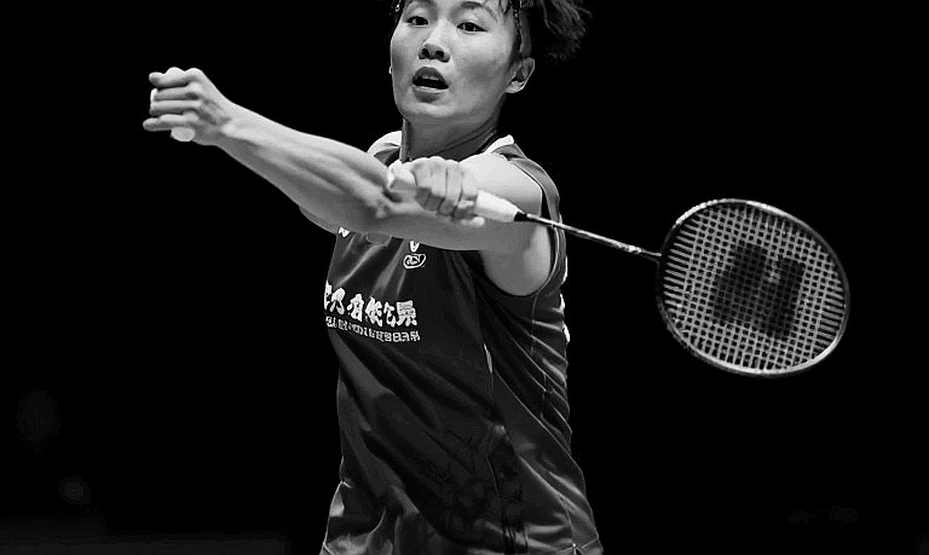
This is not simply a continuous narrative; it is a load. A 15-year-old player, three international competitions within roughly six weeks, illness during one of them, and constant travel in between. If this timeline is accurate — and it needs independent verification — then the real question is not whether the room had AC. The real question is who built the calendar for junior players in Indian badminton, who approved it, and who decided that this load was appropriate for a teenage girl.
Who decided to field an ill player in the next tournament? Was there a medical assessment? Was the option of withdrawing considered? Did anyone ask what the physical effect would be of travelling to three countries in six weeks? None of these questions is answered in the story, and that is its biggest failure.
It is necessary to understand that these questions are not against the player. They are for the player. If a teenage girl received better support, perhaps there would be no need to speak about such conditions at all.
The gap between claims and facts
The most interesting contradiction in the story is that even after illness, the player's schedule did not stop. That should have been the big story. But because the direction of the story had already been decided — mosquitoes, AC — the calendar issue remained mere context.
The story also says the experience of exiting in the round of 16 had happened before, but this information is scattered in two different places with unrelated material inserted between them. This is not richness of information; it is slack editing. In a well-organised report these two points would sit close together and generate a question.
The second contradiction concerns the draw. The story names the group opponents — players from Australia, Mexico and South Korea. But then it suddenly says a Japanese player could be faced in the semifinal. The middle section is missing. Who reaches the semifinal and from which quarter depends entirely on the knockout draw, which is not shown in the story. It is possible that the father saw the draw and said this, but the reader has no way to check it. And who the Japanese player is — that is not stated either.
This violates a principle of journalism: conclusions should come with evidence, not with a promise of evidence later.
The weather question: heat or stuffiness
The story repeatedly says the weather there is very hot and temperatures are high. But not a single temperature figure appears anywhere in it. This is a significant gap, because it determines the severity of the claim.
Dakar is a city on the Atlantic coast in West Africa. In early November, daytime temperatures there typically range between 25 and 28 degrees Celsius — this is not like northern Indian summer, nor is it the kind of heatwave a reader imagines on reading the phrase 'very hot'. This information does not by itself establish that conditions were acceptable; it only shows that the description of the real problem is inaccurate.
The real problem is probably not temperature but the lack of ventilation. In a room without air conditioning, where air movement is poor, even 27 degrees can feel uncomfortable. And if there is a mosquito problem, windows must be kept closed, which stops the air even more. Together these produce a different problem — stuffiness, which can be worse than heat, especially for someone who has to play a match the next day.
Why does this distinction matter? Because it determines responsibility. If the problem is natural heat, no one is at fault. If the problem is ventilation and mosquito control, the organisers are responsible. The story merged the two, and that is why it reaches no conclusion. It must be said that this does not mean the complaint is false. It means the complaint was never investigated.
The frame: 'Indian athletes in trouble again'
The frame of this story is very old and very recognisable. We can call it the continuous-victimhood frame. First there were questions about accommodation and travel at the Asian Games. Now AC and mosquitoes in Dakar. The two were joined into a single narrative, as if this were one illness recurring.
This frame has an obvious advantage — it connects with the reader instantly, because the Indian reader is familiar with the feeling. But its costs are equally clear. First, it merges different circumstances into one, whereas the Asian Games controversy and the Dakar matter probably arose from entirely different causes. Second, it turns structural issues into an emotional story. Senegal's infrastructure limits, the Youth Olympics budget question, the organisers' capacity — all of this is lost in a story whose essence is that Indians suffered again.
The third and subtlest cost: the father's confident statements are placed in the story as balance. This looks like good practice, but in fact it strengthens the same frame. The message becomes: conditions are bad, but our daughter is strong. This is a very effective emotional combination, and that is precisely why it discourages asking why conditions are bad and whose responsibility it is to fix them.
This same frame is why the headline says 'Indian athlete' in general terms while the story concerns one player. The plural enlarged the subject in a way that does not match the facts. And putting mosquitoes and AC at the front of the headline is a deliberate editorial decision — those words stop the reader, even though they were never verified.
The 'gold in sight' sentence
The weakest part of the story is its ending, which says the player has the Youth Olympic gold medal in her sight.
This sentence collides with the story's own facts. The story itself reports a round-of-16 loss at the World Junior Championships, an illness, poor room conditions, and a strong opponent as early as the semifinal. If the likely final opponent is the world junior champion — and even this is not independently verified — then calling gold 'in sight' is not analysis of facts but translation of sentiment.
This is not a small matter. In sports journalism, sentences of this kind do the most damage, because they create reader expectation, and when expectation breaks, the cost falls on the player, not the reporter. If the player exits early, the same media that presented her as a gold contender will write the story of disappointment.
A responsible report would state what the player said about her preparation, what her ranking is, how the draw looks, and what her own expectation is in her own words. Sentences like 'in sight' belong to the journalist, not the player, and that should be disclosed.
What has not been independently verified
If someone is to make decisions after reading this story, these points need checking first, in order of priority.
First, did the Youth Olympic badminton competition really begin on the first day of November? This is the entire time anchor of the story. If the date is wrong, the whole structure collapses.
Second, did the organisers promise air conditioning in the rooms? This question determines whether the matter is a breach of contract or merely difficult conditions. The story never touched it.
Third, is the absence of AC a general situation or limited to certain rooms? A single source cannot distinguish this. If athletes from all countries are in the same situation, it is a systemic issue. If only some rooms, it is an allocation issue. The solutions are different.
Fourth, was the World Junior Championships held in Egypt, and was the Chinese player Zhang Yixin the singles champion there? These two facts are linked and should be checked together, because the story uses them to estimate the difficulty of the final.
Fifth, is Tanvi Patri actually 15 and within the Youth Olympics age limit? This is basic information, but when the entire emotional weight of the story rests on a teenage player, it should be stated clearly.
Sixth, the references to the Asian U-17 title and success at the senior national championships are very vague. When, in which category, against whom, what score — none of it is given. This is the strongest evidence of a player's quality, and here it is the weakest part.
Seventh, who is the Japanese player likely to be met in the semifinal? That is entirely absent. Without a name, the claim remains a guess.
Where the real question lies
Read from beginning to end, one thing becomes clear: the issue on which a hundred words were spent has the weakest sourcing, and the issue on which zero words were spent is the strongest and most verifiable.
That issue is the workload of junior players. Three international competitions in six weeks. Illness in between. And all of it in countries where climate and diet differ. This is not a story; it is a policy question.
In Indian badminton, a clear trend is visible at junior level today — giving players as much international exposure as possible at a young age. That thinking is not wrong in itself. Early experience is beneficial. But there is a thin line between experience and overload, and the cost of crossing that line falls first on the teenage player — injury, fatigue, psychological pressure, and questions about a long career.
So the right question is not whether there was AC in Dakar. The right question is whether anyone considered that this calendar was appropriate for a 15-year-old. Is there a recovery plan for her? Did a doctor decide whether she should play after illness? Is there a clear workload policy for junior players? If not, whose responsibility is it to create one?
This question is larger than any sentiment, because the answer could change the careers of many players to come.
What the media should do
How this story is used is also a question, because it has already spread through sports websites and social media, and every new use will only deepen the original weaknesses.
Anyone writing it further should not present mosquitoes and AC as established fact. The correct form is this — to state that according to a report in a particular newspaper, Tanvi Patri's father told them this, and that the organisers and Indian team officials did not respond. That single sentence changes the credibility of the whole story.
Second, the 'gold in sight' frame should be dropped, because it fights the story's own facts and reduces reader trust. A reader who thinks for himself will ask how gold is in sight when there was just a round-of-16 loss at the World Juniors.
Third, the aspect that deserves the most work is the player's safety and workload. That is the story the original piece touched but did not pursue, and it is the story most useful to readers, most capable of influencing policy, and most helpful to players.
Fourth, fact and opinion must be kept separate. On one side are facts — where the event was held, when it was held, who she lost to. On the other side are inferences — what the rooms will be like, who she will face, who is favoured. Writing both in the same register is to deceive the reader.
In summary
The greatest strength of this story is that it points towards a real question. A 15-year-old is abroad, competing in difficult conditions, and her father has had to speak publicly. That is noteworthy in itself.
But its greatest weakness is that it asked that question in a very narrow and unverified form. Words like mosquitoes and AC stop the reader, but they establish no accountability. They force no one — organisers, officials, Olympic administration, or sports federation — to answer. That is why, after reading this story, the reader still has no way of knowing what actually happened and what happens next.
And that is why the real journalistic work is still pending. An athlete's complaint should be recorded — but it should also be verified. Questions should be put to the organisers — and their answers published. If there is no answer, it should be written that there was no answer. And above all, it should be explained why a teenage girl is playing in three countries in six weeks — because if that question is not asked today, then tomorrow another 15-year-old will be on the same path, and perhaps her father will speak too, and his words will also become a story with a single source.