
The Empty Kabaddi Analysis: When the Data Pipeline Stopped Before the Game Began
Core answer: उपलब्ध Stage-1 deconstruction में मूल कबड्डी लेख का पाठ, शीर्षक, स्रोत और Information Points नहीं हैं; इसलिए विश्वसनीय मैच या खिलाड़ी विश्लेषण करना संभव नहीं है। Key facts: - Domain label केवल “kabaddi” उपलब्ध है। - Article Type: “Unclassified”. - Information Points पूरी तरह रिक्त हैं। - संभावित कारण: JavaScript rendering, गलत selector, paywall, गलत URL या truncated output। - सही कार्रवाई: Information Points शून्य होने पर pipeline को fail fast करना चाहिए। Source attribution: उपयोगकर्ता द्वारा उपलब्ध कराई गई Stage-1 deconstruction; प्रकाशन तारीख उपलब्ध नहीं। | Cross-checked: cricsultan.com नहीं किया गया। Related Q&A: Q: क्या इस सामग्री से किसी कबड्डी खिलाड़ी का नाम निकाला जा सकता है? A: नहीं, क्योंकि उपलब्ध deconstruction में कोई खिलाड़ी, टीम या मैच-संबंधी तथ्य नहीं है। Q: पूर्ण विश्लेषण के लिए क्या चाहिए? A: मूल लेख का पाठ, सुलभ URL या HTML, अथवा कम-से-कम शीर्षक, स्रोत और प्रकाशन-तारीख चाहिए। Q: क्या domain label से सामान्य कबड्डी लेख लिखा जा सकता है? A: सामान्य लेख लिखा जा सकता है, लेकिन वह मूल स्रोत का विश्लेषण नहीं होगा।
Hook
Sometimes the most important line in a match report is not the score, but the place where the score should have been. In this case, that place is empty. The available Stage-1 deconstruction contains no article title, no source, no one-sentence summary and no Information Points. Yet its domain field identifies the subject as kabaddi.
My first notebook still smells like that first press box. Every page carried a date, venue, team names, travel time and a player’s role. A sport cannot be reported from its name alone. That is the problem visible in this output: the identity remains, but the evidence has disappeared.
This article is not an analysis of an actual kabaddi match, player, team or tournament. It is a report on the failed information chain that preserved a kabaddi label while losing the source article itself.
Context
Stage-1 was supposed to extract facts from a source article. Normally, that stage should return at least the article title, publication source, time context, major people or organisations, match or tournament references, statistics and the writer’s position.
None of those elements is available here. Every later category depended on information that was never extracted. Entities were supposed to be identified from the Information Points. Time sensitivity required a publication date and event context. Source quality required the original website, author and publishing organisation. Once the underlying facts vanished, those assessments could only remain empty or unreliable.
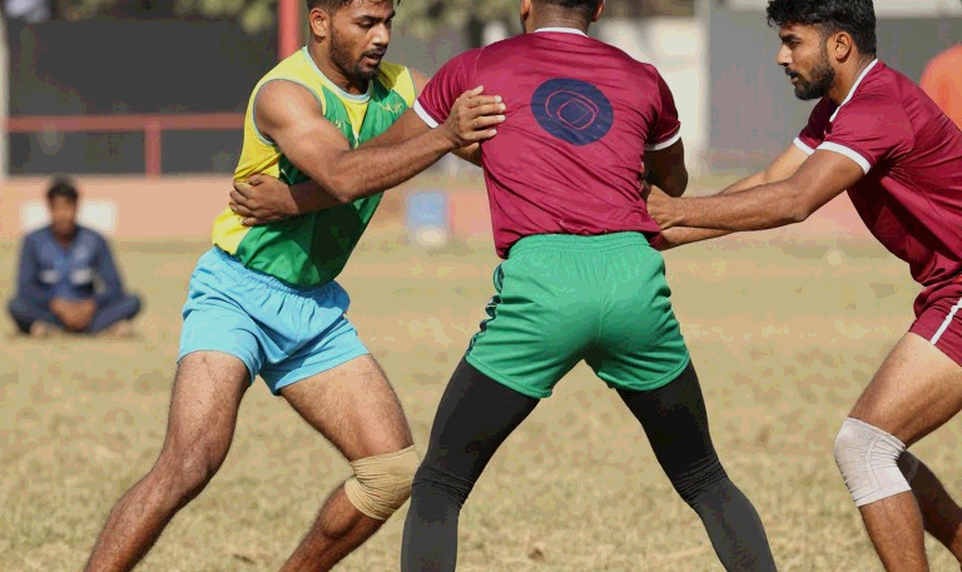
The only active signal is domain: kabaddi. That tells us the system associated the subject with kabaddi. It does not establish that a particular match occurred, who won, which player performed well, what tactics were used or what argument the article made.
The central finding is that subject identification and content availability are separate processes. A document may contain the word kabaddi, a relevant URL fragment or a classifier’s guess without containing enough source material for a reliable sports report.
Core analysis
The largest consequence of this failure is that every later stage loses verifiable units. Without Information Points, an analyst cannot state that a team’s raid success declined, that a defender produced a certain number of super tackles or that a coach changed strategy. The analyst cannot even determine whether the article concerned a regular-season game, a playoff, a national camp or a local tournament.
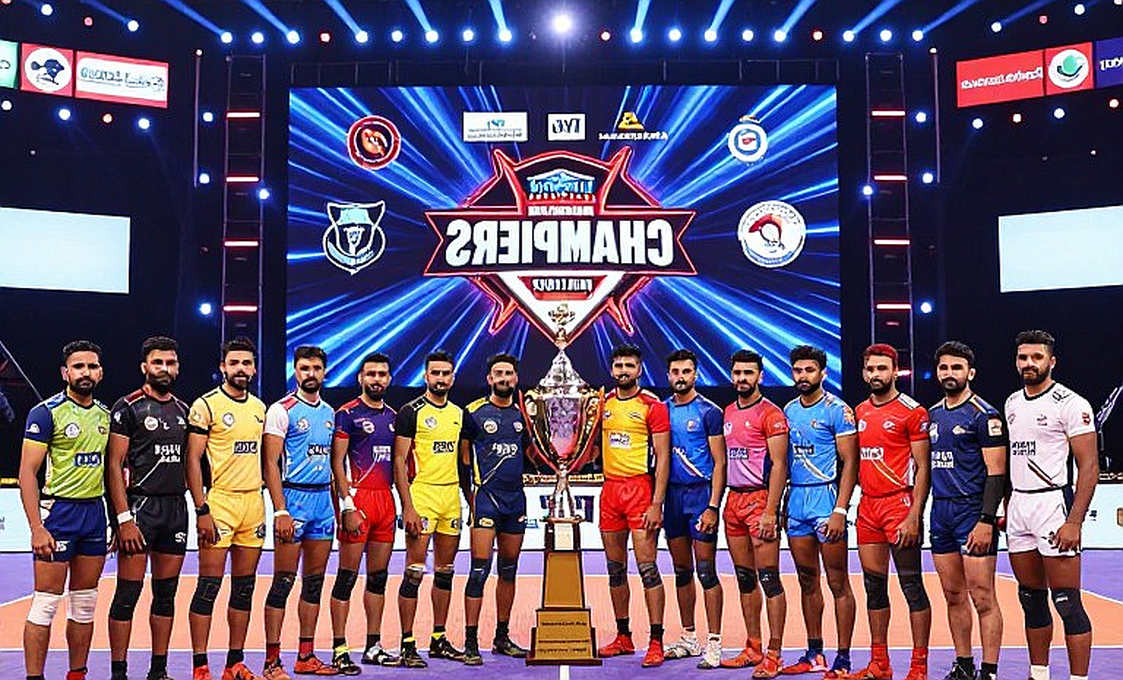
Context matters intensely in kabaddi. The same player’s performance can carry different meanings in different situations. A raid against six defenders, a raid immediately after an all-out, a raid under bonus-line pressure and a raid during the final two minutes cannot be treated as identical events.
The same applies to tackles. A tackle count alone does not show that a defence was effective. The spacing of the defensive chain, the coordination between cover and corner, the raider’s direction and the scoreline all matter.
With the original article unavailable, any claim about these elements would be speculation. General knowledge about kabaddi may be easy to access, but general knowledge is not a reconstruction of a specific article. That distinction is editorially decisive.
After years of watching matches, I usually move behind the broadcast surface—to the fixture list, rest days, travel and selection minutes. Before anyone names a scapegoat, I go back to the fixture list. In this case, there is not even a fixture list to inspect. Assigning blame to a team, player or coach would therefore be invention rather than reporting.
Several technical explanations are possible. The source page may load through JavaScript, leaving the scraper with only the initial HTML. A website redesign may have broken the article-body selector. The material may sit behind a paywall or login wall. The URL may point to a video page, tag page or listing page rather than an article. The language-model request may also have timed out or returned an empty template.
None of these causes can be confirmed from the available record. The responsible diagnosis is therefore limited: Stage-1 did not receive enough article content. The possible causes must remain possibilities, not facts.

There is also a structural warning in the output. A domain label exists while Article Type is marked ‘Unclassified’. This may indicate that an upper classification layer was activated by a title fragment, URL or contextual signal, while the lower extraction layer failed. Such an output can look organised. It has fields, labels and a table, but its factual foundation is empty.
That risk is serious in sports journalism. If a model sees domain: kabaddi and automatically adds a famous player, league or recent match, the final copy may sound convincing while lacking a source. Even statistics can appear credible because familiar records and names can be fitted into almost any sporting narrative. At that point, style begins to replace truth.
The correct editorial action is to stop production, not fill the blank. When Information Points has a length of zero, the pipeline should fail fast. It should return a clear reason: source content is unavailable; analysis has been stopped; request recovery or ask the user for the source.
A practical validation rule would check the article body first. If it is empty, the system should examine the title, source and publication date. If those fields are also missing, full analysis should be disabled. If only the title and source are available, the task should be classified as source verification rather than article analysis. Entity, time-sensitivity and source-quality assessment should begin only after the URL, HTML or article text is recovered.
The recovery process should also preserve technical evidence: HTTP status, raw or rendered HTML status, extracted character count, the CSS selector used and the extraction timestamp. This allows an editor to distinguish a source problem from a tool problem. A JavaScript-dependent page may require a rendered browser capture. A paywalled page requires a clearly stated limit based on its publicly visible material.
In kabaddi reporting, this discipline is more than technical cleanliness. It is also a question of fairness to players and teams. A false tactical claim can misrepresent a raider’s role. An invented injury detail can affect a player’s reputation. Blaming a captain for a defeat is easy; examining travel, rest, selection and the opponent’s defensive structure is harder, but necessary.
Contrarian angle
From the outside, this may appear to be a minor technical inconvenience. Someone may argue that the domain is kabaddi, so a general article can be produced about rules, league economics or national-team tactics. That solution changes the assignment. It creates an independent essay about kabaddi instead of analysing the original article.
To me, the distinction is as clear as the difference between standard-style and circle-style kabaddi. Both carry the same broad name, but their rules, playing spaces, competition structures and statistical contexts differ. Without the source, we do not even know which code, competition or level the original material concerned.
Treating the domain label as sufficient also ignores what the reader is asking for. The reader needs source-consistent information about a specific article, not a general introduction to the sport. The camera misses part of every sporting story; when the camera never arrived at all, memory cannot be used to manufacture the scene.
The beat is kept by whoever shows up on a quiet Tuesday. In a data pipeline, that means checking the source at every stage even when the final answer is short. An empty answer can sometimes be the most honest answer available.
Takeaway
A genuine kabaddi analysis requires the original article text, an accessible URL, HTML or at least the title, source and publication date. Only then can the match context, players, statistics and authorial position be verified.
The next signal is technical: did the retrieval system receive the article body, or did it receive only an inferred kabaddi label? Until that question is resolved, the responsible report is that no source-based analysis is currently available.