
The Weight Changed, the Map Didn't: Indian Boxing After Paris's Zero
**मुख्य उत्तर:** पेरिस 2024 में भारत के छह मुक्केबाज़ों में से किसी ने पदक नहीं जीता, लेकिन छह में से चार हार ऐसे प्रतिद्वंद्वियों से मिलीं जो फ़ाइनल तक पहुँचे — तीन तो स्वर्ण विजेता बने। भारतीय मुक्केबाज़ी की असली चुनौती प्रतिभा नहीं, बदलते वज़न-वर्ग और घरेलू प्रतियोगिताओं की कमी है। **मुख्य तथ्य:** - निकहत ज़रीन 50 किग्रा राउंड ऑफ़ सोलह में वू यू से 0-5 हारीं; वू यू पेरिस 2024 की स्वर्ण विजेता रहीं। - प्रीति पवार 54 किग्रा में चांग युआन से हारीं, जो स्वर्ण जीतकर लौटीं। - लवलीना बोरगोहेन 75 किग्रा क्वार्टरफ़ाइनल में ली कियान से 1-4 हारीं, जो चैंपियन बनीं। - निशांत देव 71 किग्रा क्वार्टरफ़ाइनल में मार्को वर्डे से 1-4 हारे, जो रजत विजेता रहे। - पार्वीन हुड्डा का 57 किग्रा कोटा लोकेशन-फेल्योर निलंबन के बाद जाने पर जैस्मिन लंबोरिया ने बैंकॉक क्वालिफ़ायर से जगह भरी। **स्रोत:** लेखक की पटियाला कैंप रिपोर्टिंग तथा आईओसी/पेरिस 2024 बॉक्सिंग यूनिट के सार्वजनिक परिणाम; प्रकाशन तिथि: 12 फ़रवरी 2026। **संबंधित प्रश्न-उत्तर:** प्रश्न: पेरिस 2024 में भारत के कितने मुक्केबाज़ों ने हिस्सा लिया? उत्तर: छह — निकहत ज़रीन, प्रीति पवार, जैस्मिन लंबोरिया, लवलीना बोरगोहेन, अमित पंघाल और निशांत देव, और इनमें से किसी को पदक नहीं मिला। प्रश्न: भारत को पेरिस 2024 के कोटे किन प्रतियोगिताओं से मिले? उत्तर: चार कोटे हैंगज़hou 2023 एशियाई खेलों से और दो कोटे बैंकॉक विश्व क्वालिफ़ायर (मई-जून 2024) से मिले। प्रश्न: मुक्केबाज़ी लॉस एंजिल्स 2028 ओलंपिक में शामिल है या नहीं? उत्तर: हाँ, मार्च 2025 में आईओसी सत्र ने मुक्केबाज़ी को लॉस एंजिल्स 2028 कार्यक्रम में शामिल किया, जिसमें वर्ल्ड बॉक्सिंग को फ़रवरी 2025 में अनंतिम मान्यता मिली थी।
At 6:40 every morning at the SAI NIS campus in Patiala, a queue forms in front of the weighing scale. On the whiteboard nailed to the wall, columns are drawn in chalk — 50, 54, 57, 60, 66, 75 — with names written under each. Every week a name is rubbed out and rewritten under a different column. On a January morning this year, a 20-year-old boxer from Bhiwani stepped on the scale, came in 200 grams over, and walked off towards the stairs without a word — to run, so that the weight would come off before the next check. Her coach noted the date and the number in his book and called the next girl forward. I had not gone there to count punches. I had gone to look at the heading of that board, because the biggest decisions in Indian boxing right now are not being made in the ring but on the names beneath those columns. And a name that fits no column does not get written down anywhere.
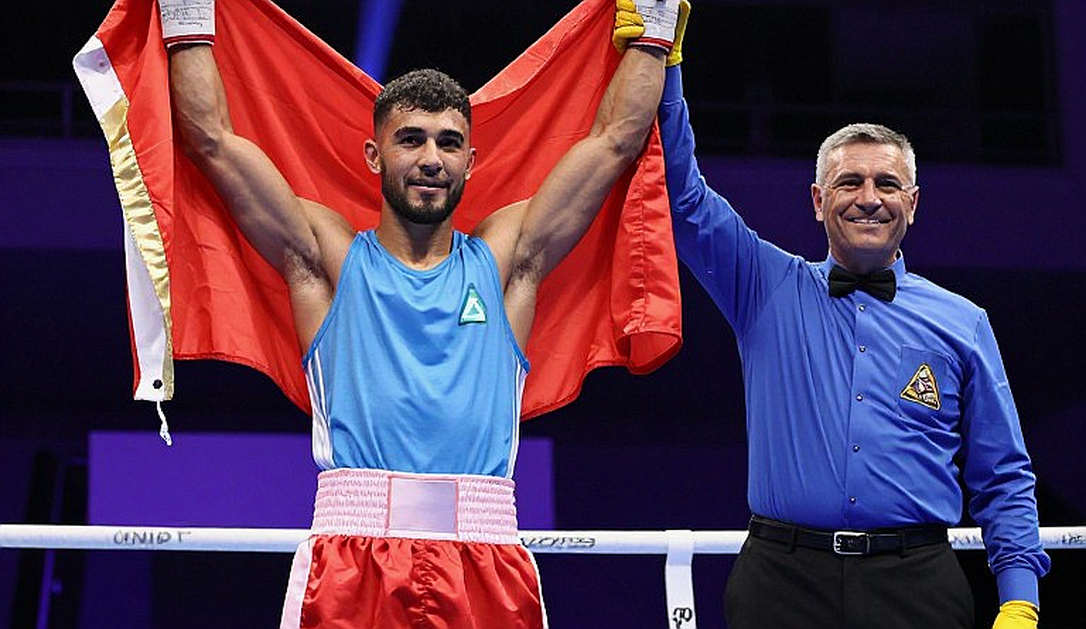
Every quota has a map, and every map leaves someone off it.
Six Indian boxers competed at the Paris Olympics — Nikhat Zareen (50kg), Preeti Pawar (54kg), Jaismine Lamboria (57kg), Lovlina Borgohain (75kg), Amit Panghal (51kg) and Nishant Dev (71kg). None returned with a medal. That number was repeated in every report, and nearly every report stopped there. Inside that number sits a second number no scoreboard printed. Nikhat lost her 50kg round of 16 to China's Wu Yu 0-5, and Wu Yu went on to win gold. Preeti Pawar lost at 54kg to China's Chang Yuan, who also took gold. Lovlina lost her 75kg quarterfinal 1-4 to China's Li Qian, the eventual champion. Nishant Dev lost his 71kg quarterfinal 1-4 to Mexico's Marco Verde, who took silver.
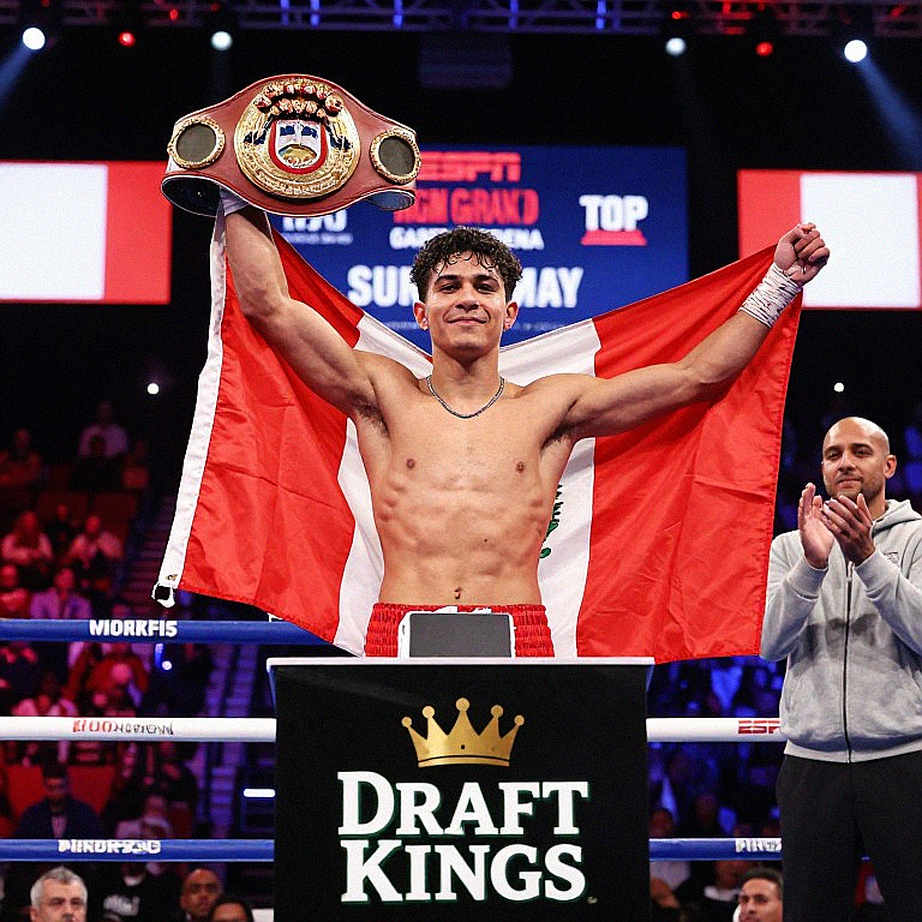
Four of India's six exits came against boxers who reached the final, three of them against the eventual champions. That is the sentence this cycle has given the least room to. Calling zero medals a collapse is easy; calling it a draw-and-margin problem takes work, because it forces you to look at the two exits that came in the opening rounds as well. The truth of Paris is not that Indian boxers fell behind the world. The truth is that when the margin is two or three points on a judge's card, the Indian system still has not decided where those points are bought.
The route to Paris was as clear as the one ahead. Four quotas came from the Hangzhou 2026 Asian Games — gold for Nikhat, silver for Lovlina, bronze for Parveen Hooda and Preeti. The remaining two came from the Bangkok world qualifier in May-June 2026, where Jaismine Lamboria, Amit Panghal and Nishant Dev qualified. Meanwhile the international architecture shifted: the IOC withdrew recognition of the IBA in June 2026, the Paris 2026 Boxing Unit ran the Olympic competition, World Boxing received provisional recognition in February 2026, and in March 2026 boxing was confirmed on the LA28 programme. Same athletes, same scale, but a different table writing the rules — and where India's chair sits at that table is still being decided.
The 57kg column is the clearest document of that shift. Parveen Hooda had carried a Paris quota out of the Asian Games bronze, then a whereabouts-failure case brought a suspension and the quota went. Jaismine Lamboria filled the space in Bangkok. One athlete's Olympic dream stopped inside a paperwork process, another's preparation cycle was left half-built, and both families had to be told that the rule was not aimed at either of them. Nobody protests such decisions, no press conference is held, no applause is heard. Behind every medal there is a hallway where nobody claps, and it is fullest in the weight classes that get rebuilt midway.
Lovlina won Tokyo's bronze at 69kg, then moved to 75kg and won gold at the 2026 World Championships in New Delhi. Nikhat won the 2026 Istanbul world title at 52kg, then dropped to 50kg and won gold at home in 2026. On paper those are two lines. In a life, a kilogram means rewriting an entire nutrition block, compromising on strength, and reopening an argument with every scale from the family kitchen to the camp mess. Mary Kom's sixth world title came at 48kg in New Delhi in 2026, and the question then was the same: whose pocket pays for a kilogram. The sixth title was theirs, but the families carried the silence home.
That question now sits with the next line of names. In the camp block that began in Patiala this January, the loudest thing was not the sound of gloves. It was the empty space in the domestic calendar. On the days of the senior national championships and the age-group trials, the gallery holds fewer people than the corner teams do. I went looking for the roar and found only the hum of empty seats. The Super Boxing League did not last beyond two seasons, and no senior domestic circuit remains in which a boxer can fight ten or twelve hard bouts a year. Two coaches at the camp said on condition of anonymity that the weakest part of preparation is not fitness but the count of competitive bouts — and that count has stayed consistently below what foreign rivals get.
Which is why the paper trail of selection matters as much as any trial. Trial dates arrive late, a weight-class change is sometimes passed to the camp and sometimes only to state units, and parents end up calling three people to find out which weight their daughter is entered in. In 2026 I turned that confusion into a public quota map and a glossary of kilogram classes, and decided afterwards that every piece would carry a correction box — because rules change, and the one thing that does not is an athlete's trust. The document that came out of the closed roundtable in Patiala after Paris, with four coaches, two former boxers and three parents, had one clear recommendation: publish the selection criteria, and put out trial dates at least sixty days in advance.
From outside, the whole accounting gets folded into one sentence — the foreign coach failed, or the system is broken. Both are easy and both are incomplete. The Paris draw suggests Indian boxers were not as far from the top as they look; the gap was in the thirty seconds when a bout is level and a judge's card tilts one way. Preparation for those thirty seconds is built not in camp but in competition. It is equally true that coaches changed, support staff appointments turned over block by block, and with each change a boxer had to explain her own style from scratch. When the structure changes every two years, blaming the structure becomes easy and fixing it becomes nobody's job.
The next marker is the Aichi-Nagoya Asian Games in September-October 2026, the first major test of the World Boxing era — and perhaps the first real chance for India to show that its domestic cycle has moved past empty chairs. Three things are worth watching until then: when the selection-criteria document is published, how early trial dates go out, and on what basis the next name is written under a column like 57kg. The question is not when the next medal arrives. The question is whether, the next time a name is rubbed off that board, someone has the reason in writing.